
Christmas Paper Crafts, Ideas & SVG Projects
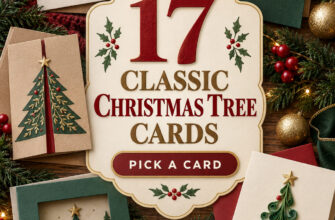
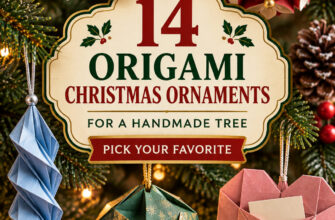
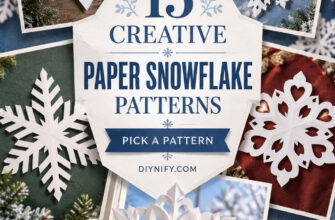
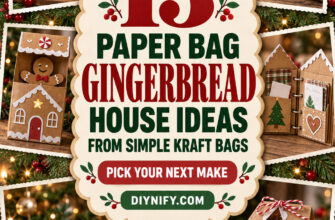
Christmas Paper Crafts Should Start With The Finished Use
A paper snowflake for a window and a layered Christmas village may begin with the same material, but they solve completely different craft problems. One needs a clean fold and a few careful cuts. The other has to stand, layer, align, and still look good once it is placed on a mantel or shelf.
That is how we approach Christmas paper crafts on Diynify. Some projects are quick ideas you can adapt with scissors, glue, cardstock, recycled paper, or whatever is already in the craft drawer. Others use SVG files when precise layers, repeated shapes, folding tabs, or dimensional construction make a prepared design more useful.
The easiest way to choose is to ignore the motif for a moment and decide what the finished piece has to do.
Quick Christmas craft check: Are you making something to hang, give, mail, display, fill with treats, place on a table, or build into a larger Christmas scene? That answer usually narrows the project faster than choosing between trees, stars, snowflakes, reindeer, or gingerbread houses.
Choose The Project Before The Christmas Motif
It is tempting to begin with “I want to make a Christmas tree” or “I like snowflakes.” A better first question is what kind of object you want at the end.
A Christmas tree can become a flat card, folded ornament, layered shadow box, standing centerpiece, garland element, gift tag, paper sculpture, or part of a miniature village. The subject stays the same while the construction changes completely.
| Project Type | Good For | What Matters Most |
|---|---|---|
| Paper Ornaments | Christmas trees, garlands, windows, gifts | Low weight, strong hanging point, balanced shape |
| Handmade Cards | Greetings, invitations, gift enclosures | Readable details, clean folds, mailing thickness |
| Paper Decorations | Mantels, walls, shelves, windows | Scale, color, mounting, visibility from a distance |
| Gift Boxes And Holders | Treats, small presents, party favors | Strong folds, closure, usable interior space |
| Shadow Boxes | Framed decor, keepsakes, layered scenes | Layer order, spacing, contrast, frame depth |
| Paper Villages | Mantels, tables, shelves, window displays | Structural support, repeatable scale, stable bases |
| Garlands And Chains | Doorways, walls, trees, party spaces | Repetition, speed, lightweight construction |
This also makes large Christmas idea collections easier to use. Instead of scrolling until one image happens to catch your eye, you can pick a format first and then choose the version that fits your space, time, and paper.
Not Every Christmas Paper Craft Needs An SVG
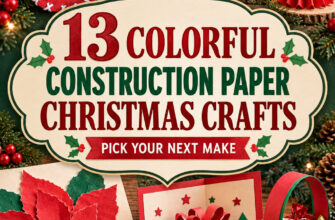
Some of the nicest Christmas crafts with paper are built from very simple actions: fold, cut, roll, tear, weave, pleat, curl, or glue.
Paper stars are a good example. A folded star gains its character from the creases and shadows, so a complicated cutting file would add very little. Paper chains depend on repetition and color. Torn-paper winter scenes look better when the edges are slightly irregular. Origami relies on the fold sequence rather than a cut pattern.
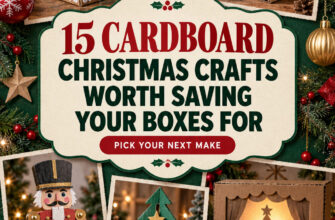
Simple construction also makes it easier to improvise. Leftover wrapping paper can become folded ornaments. Kraft paper can turn into stars, tags, houses, or tree shapes. Old book pages work well for rosettes and layered decorations. Cardboard tubes can become small characters, houses, bells, trees, or hanging ornaments.
The material and technique are doing the design work.
When A Christmas SVG Actually Saves Time
SVG projects make more sense when precision is part of the result.
A layered snow scene needs openings to line up. A paper house needs walls, roof pieces, tabs, doors, and windows to meet correctly. A gift box has to close. Repeating twenty identical ornament shapes is much easier when every cut follows the same pattern.
Christmas SVG designs are especially useful for layered wall art, shadow boxes, paper villages, dimensional cards, lanterns, ornaments, boxes, gift holders, and projects with several repeating pieces.
That does not mean the finished craft has to look exactly like the original preview. Paper choice changes a design quickly. So does scale. A traditional red, green, and gold project can become almost architectural in white cardstock. Kraft paper makes the same structure feel more rustic. Vellum can soften windows or snow layers. Metallic paper works better as a small accent than as every layer.
The file gives you the structure. The paper still gives the project its personality.
Let The Paper Decide What The Project Can Do
“Paper” covers materials that behave very differently on the craft table.
Thin printer paper folds easily but cannot support much weight. Cardstock gives layered crafts clean edges and enough stiffness to stand. Crepe paper stretches and curves. Tissue paper is light enough for soft texture and translucent layers. Corrugated cardboard already has thickness built into it.
| Paper Or Material | Best Christmas Uses | Watch For |
|---|---|---|
| Printer Paper | Snowflakes, origami, templates, simple folded crafts | Soft structure and easy wrinkling |
| Cardstock | SVG layers, cards, boxes, villages, ornaments | Very heavy stock can resist tight folds |
| Kraft Paper | Stars, tags, rustic ornaments, garlands | Low contrast if every layer uses the same tone |
| Tissue Paper | Pom-poms, translucent decor, texture, lightweight ornaments | Glue marks and tearing |
| Crepe Paper | Flowers, greenery, soft ornaments, botanical decor | Stretch direction changes the shape |
| Vellum | Windows, lantern inserts, snowy overlays | Visible adhesive |
| Corrugated Cardboard | Houses, trees, relief decor, large structures | Thick edges and harder detailed cutting |
| Book Pages | Rosettes, stars, collage, vintage ornaments | Printed detail can make tiny projects feel busy |
There is no prize for using expensive paper where ordinary paper would work better. A crisp geometric ornament may benefit from good cardstock, while a wrinkled tissue-paper tree can look better because the material is imperfect.
Paper Christmas Decorations Work Better In Groups
Christmas decorating is one of the few times repetition usually helps.
One folded paper star can feel like a small craft project. Nine stars at different heights become a window installation. One miniature paper tree is an object. A row of trees becomes a winter forest. A single house is cute; several houses with coordinated proportions read as a Christmas village.
The trick is to repeat one thing and vary another.
Keep the shape consistent but change the size. Keep the paper consistent but alternate the motif. Repeat white stars but hang them at different heights. Use the same house template with different window details. Make a garland from one basic form in several related colors.
This gives DIY paper Christmas decorations enough rhythm to look planned without forcing every piece to be identical.
Match The Craft To Where It Will Live
Christmas crafts often look great on a worktable and completely different once they move into the room. Scale is usually the reason.
Tree ornaments need to be readable among branches, lights, ribbon, and other decorations. Tiny internal details can disappear once the ornament is hanging.
Mantel crafts can handle more depth. Paper houses, layered trees, dimensional stars, framed scenes, and small lanterns have space to cast shadows and be viewed from several angles.
Window decorations behave differently again. Snowflakes, translucent paper, hanging stars, cut-paper silhouettes, and simple garlands work well because daylight becomes part of the design.
Table decorations need stability. A centerpiece that leans every time the table moves becomes annoying very quickly. Wider bases, folded supports, heavier cardstock, or a hidden backing piece can make a large difference.
Wall decor is seen from farther away, so silhouette and scale matter more than tiny cut details.
Christmas Ornaments Need Less Detail Than You Think
Small crafts punish unnecessary detail.
Thin antlers, tiny snowflakes, narrow lettering, miniature berries, delicate branches, and complicated internal cuts may look beautiful while enlarged on a screen. Reduce them to ornament size and they can turn into weak points.
For paper Christmas ornaments, look at the outside shape first. A strong star, bell, tree, house, angel, bauble, snowflake, stocking, or gingerbread silhouette will still read after the ornament is hanging among other decorations.
Then add one or two details that survive at that scale.
Depth can replace detail too. Two simple layers separated slightly often look better than one flat layer filled with tiny cuts. A fold through the center can give a plain paper tree more presence. Curving the sides of a bauble catches light without adding another decorative element.
Small does not have to mean intricate.
Cards, Tags And Gift Packaging Are Good Batch Projects
Christmas is rarely a one-card holiday.
If you need twelve cards, twenty gift tags, or a set of small favor boxes, the fastest project is not always the design with the fewest pieces. Repeatability matters more.
Make one complete sample before starting the batch. That first piece tells you how long assembly actually takes, where glue is awkward, which details are too fragile, and whether the finished size is practical.
Then prepare by operation rather than finishing one project at a time. Cut all bases, score all folds, sort matching layers, prepare hanging loops, and glue repeated pieces in groups.
This is especially useful for Christmas SVG projects because identical parts can be organized before assembly. It is also useful for handmade projects such as paper chains, folded stars, rosettes, tags, and simple ornaments.
A ten-minute craft becomes a very different project when you need thirty of them.
Christmas Villages And Paper Houses Need A Little More Planning
Paper houses sit somewhere between decoration and small-scale construction.
The roof has to meet the walls. Windows need enough surrounding paper to stay strong. Tabs need space for adhesive. A house with a light inside needs openings that make sense once the room is darker.
For a single cottage, small imperfections are easy to hide. A whole village makes size differences and crooked bases much more obvious, so it helps to choose a shared scale before making several buildings.
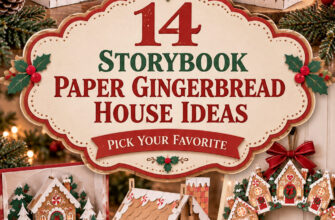
This is also a good place to use both approaches found throughout this Christmas category. You can create simple folded houses from hand-drawn templates, or start with prepared cutting files when the project has layered roofs, decorative facades, detailed windows, or more complicated construction.
For a more structured version, the gingerbread paper house SVG designs collection includes houses built as ornaments, luminaries, gift boxes, cards, layered scenes, and freestanding displays.
Simple Christmas Paper Crafts Can Still Look Finished
A project does not need fifteen layers to look good.
Clean folds help. So does consistent spacing. A limited paper palette often looks calmer than using every Christmas color in the pack. Visible glue, crooked edges, and uneven mounting usually affect the result more than a lack of decoration.
Try finishing the basic structure before deciding it needs more.
If the piece feels flat, raise a layer instead of adding another color. If a star feels plain, fold the points. If a paper tree lacks depth, curve or accordion-fold the branches. If a garland feels weak, change the spacing rather than adding more shapes.
Small structural changes often do more than glitter, stickers, bows, or extra embellishment.
And when you do want shine, a little metallic or glitter paper is easier to control as an accent. A star topper, narrow border, window glow, ornament cap, or one background layer can be enough.
Recycled Paper Belongs In Christmas Crafts Too
December produces plenty of useful paper before it reaches the recycling bin.
Wrapping-paper offcuts can become folded stars, chains, small trees, ornament panels, and gift tags. Cardboard packaging works for house structures, backing pieces, dimensional letters, and large decorations. Paper bags can be folded into stars or cut into rustic ornaments. Old Christmas cards can become tags, garlands, collage pieces, or layered accents.
The best recycled-paper projects use the existing material as part of the look instead of trying to disguise it.
Printed wrapping paper already brings pattern. Corrugated cardboard brings texture and depth. Book pages bring typography. Kraft packaging brings a warm neutral color.
It is less about making a craft “from trash” and more about noticing that the paper already has useful visual properties.
Common Problems With Christmas Paper Crafts
Most disappointing results come from a handful of practical problems rather than a lack of crafting skill.
The paper is too soft. Standing trees, boxes, houses, toppers, and large ornaments need enough stiffness to hold their shape.
The project was reduced too far. Thin bridges and tiny cutouts become fragile when detailed SVG designs are made much smaller than intended.
Too many similar colors were layered together. A layered white winter scene can work beautifully because shadow separates the pieces. Several dark green layers pressed flat may simply disappear into one another.
Glue was added before checking the layout. Dry-fitting is especially useful for shadow boxes, paper villages, floral arrangements, and dimensional decorations.
The craft was designed at desk distance. Hang or place a test piece where it will actually be used. A detail that looks obvious from twelve inches away may vanish across a room.
A batch project was chosen too late. Thirty handmade tags are fun when the design is tested early. They are much less fun the night before gifts need wrapping.
A Practical Way To Choose Your Next Christmas Project
When this category starts filling with dozens of Christmas craft ideas, you should not need to compare every post to decide where to begin.
Use this order:
- Decide where the finished craft will go.
- Choose flat, folded, layered, hanging, or freestanding construction.
- Set the approximate finished size.
- Pick paper that can actually support that format.
- Decide if freehand construction, a printable template, or an SVG file makes most sense.
- Make one test piece before committing to multiples.
- Adjust color and decoration only after the structure works.
That leaves the enjoyable part for last: choosing the Christmas theme.
Trees, stars, gingerbread houses, snowflakes, ornaments, reindeer, angels, wreaths, gifts, winter villages, bells, stockings, and botanical details can all work. The right one is the motif that fits the object you have already decided to make.
Frequently Asked Questions About Christmas Paper Crafts
What are the easiest Christmas paper crafts to make?
Paper chains, cut snowflakes, folded trees, simple stars, gift tags, basic cards, rosettes, and flat ornaments are good starting points. They use simple shapes and let you understand the paper before moving into more complicated dimensional projects.
What paper is best for Christmas crafts?
It depends on the project. Printer paper is useful for folding and snowflakes. Cardstock works better for layered projects, cards, boxes, ornaments, and paper houses. Tissue and crepe paper are good for softer texture, while cardboard is useful when the project needs more structure.
What can I make from paper for Christmas decorations?
Common paper Christmas decorations include ornaments, stars, snowflakes, trees, garlands, chains, wreaths, paper houses, Christmas villages, wall art, window decorations, table centerpieces, lanterns, and layered framed scenes.
Do I need an SVG file for Christmas paper crafts?
No. Many projects can be folded, cut by hand, torn, rolled, woven, or built from simple templates. SVG files are most useful when accurate layers, repeated shapes, score lines, detailed cuts, or dimensional construction are important.
What are good Christmas paper crafts for adults?
Layered shadow boxes, origami decorations, paper villages, dimensional stars, botanical wreaths, quilling, paper sculpture, intricate cards, gift boxes, and coordinated ornament sets offer more room for detailed construction and finishing.
Can Christmas paper crafts be made from recycled materials?
Yes. Wrapping-paper scraps, paper bags, cardboard packaging, book pages, newspaper, old cards, and clean cardboard tubes can all become useful craft materials. Choose the project around the strength and surface of the paper rather than treating every recycled material the same.
How early should I start making Christmas paper decorations?
A single ornament or card can be made whenever you have time. For sets of cards, ornaments, favors, gift boxes, garlands, or a paper village, starting several weeks before Christmas gives you room to test the design and repeat it without rushing.