
Paper Wall Decor Ideas & SVG Designs


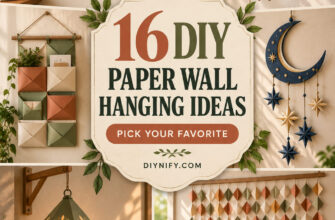
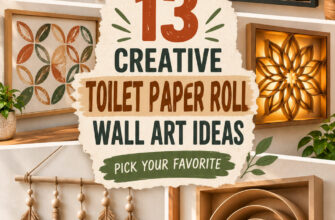
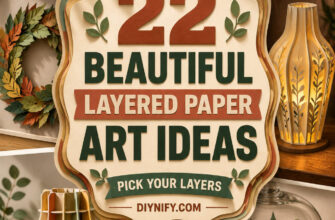
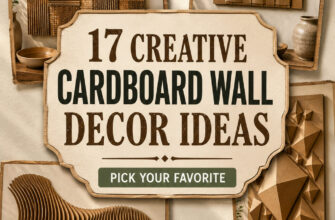
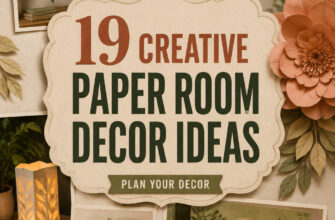
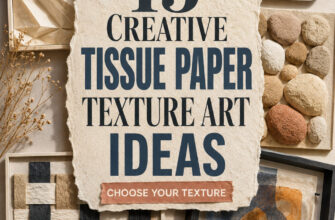
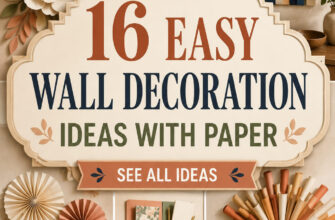
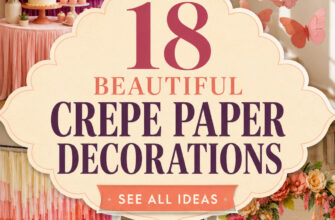
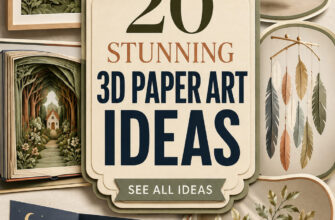
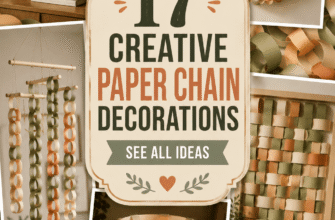
Paper Wall Decor That Belongs in the Room
Paper wall decor can be quiet and almost flat, or it can project several inches from the wall and change completely as daylight moves across it. That range is what makes paper useful here. A torn edge gives a collage its character. Folded cardstock creates crisp shadow lines. Tissue paper softens color. Corrugated cardboard can become an architectural relief instead of something that looks recycled.
The projects in this category take both routes. Some articles are built around paper wall decor ideas that you can adapt with basic tools and whatever paper you have available. Others focus on SVG designs where the shapes, layers, or construction are already planned. Neither approach is automatically better. The useful question is what you want to control yourself: the whole composition, or mainly the paper, color, scale, and assembly.
Wall-first rule: decide where the finished piece will hang before choosing how to make it. A narrow hallway, wide sofa wall, nursery corner, and small desk area need very different proportions.
Paper Wall Decor Ideas And SVG Designs Solve Different Jobs
An inspiration article is useful when you are still deciding what the wall needs. You may like the texture of torn paper, the depth of layered cardstock, or the movement of a hanging installation without wanting to copy one exact design.
SVG collections start later in the process. They make more sense when you already know you want a layered botanical panel, geometric wall piece, floral composition, dimensional scene, or another design that benefits from precise repeatable shapes.
| Content Type | Best When You Want To | What You Can Change |
|---|---|---|
| Paper Wall Decor Ideas | Find a direction, technique, composition, or material to try | Size, layout, material, color, texture, mounting, and often the entire design |
| SVG Designs | Start with planned shapes or layers instead of drawing them yourself | Paper, scale, colors, spacing, framing, and finishing details |
| Technique-Based Projects | Learn a process such as folding, weaving, quilling, layering, or collage | Pattern, density, color, scale, and final arrangement |
| Recycled Paper Projects | Work with book pages, newspaper, cardboard, tubes, or packaging | Almost everything; the material often becomes part of the visual style |
This distinction matters because paper wall art is not one craft technique. A quilled composition and a cardboard relief can solve the same decorating problem while requiring completely different tools and working habits.
Choose The Format Before The Motif
It is easy to start with a subject: flowers, leaves, landscapes, abstract shapes, butterflies, architecture. For wall decor, format usually matters more.
Flat paper art stays close to the wall or backing. Collage, cut-paper silhouettes, mosaics, woven paper panels, book-page compositions, and some papercut work fit here. These pieces are easy to frame and usually take up little physical depth.
Layered and relief art uses stacked, folded, curled, rolled, or spaced paper to create shadows. Layered cardstock, folded geometric panels, dimensional flowers, tissue-paper textures, and corrugated cardboard reliefs all change as the viewing angle changes.
Hanging paper decor uses gravity as part of the design. Garlands, chains, mobiles, vertical strands, suspended shapes, fans, and wall hangings need secure attachment points and enough flexibility to move without collapsing.
Sculptural wall pieces sit furthest from the surface. Paper flowers, folded modules, dimensional leaves, molded paper pulp, cones, tubes, and assembled cardboard forms can behave more like lightweight sculpture than framed art.
A project can combine formats. A flat collage might include raised leaves. A framed SVG piece may use spacers for depth. A paper flower wall can mix very large blooms with flat foliage to keep the composition from becoming too heavy.
Let The Paper Do Something Useful
Different papers are not interchangeable once a project moves onto the wall. The material affects shadow, stiffness, edge quality, color, and how well a piece survives after hanging.
| Paper Or Material | What It Does Well | Good Uses |
|---|---|---|
| Cardstock | Holds clean cuts, folds, curves, and stacked layers | Layered art, SVG projects, geometric reliefs, framed decor |
| Construction Paper | Easy to cut and inexpensive for larger shapes | Simple wall compositions, kids’ spaces, color-block projects |
| Tissue Paper | Creates translucent layers, soft texture, fringe, and gathered surfaces | Texture art, flowers, lightweight installations |
| Crepe Paper | Stretches and shapes more naturally than flat paper | Flowers, leaves, organic wall arrangements |
| Corrugated Cardboard | Adds built-in depth, visible flutes, and structural strength | Relief panels, geometric art, recycled wall decor |
| Book Pages And Newspaper | Adds typography, pattern, and aged visual texture | Collage, folded details, rosettes, mixed-media wall art |
| Vellum | Filters light and overlaps without becoming visually heavy | Layered panels, translucent accents, framed compositions |
The cheapest paper can be exactly right for some projects. A torn-paper landscape does not gain much from perfectly smooth premium cardstock. On the other hand, a precise layered SVG design usually looks cleaner when the sheets stay flat and the edges hold their shape.
The material should have a job.
Flat, Layered, Hanging, Or Sculptural?
If you are unsure where to begin, think about the finished effect rather than the technique.
| Finished Effect | Good Starting Point | Difficulty To Watch |
|---|---|---|
| Clean And Graphic | Papercut shapes, collage, mosaic, woven strips | Keeping spacing and edges intentional |
| Soft And Textural | Tissue paper, crepe paper, torn paper | Preventing glue marks, sagging, or uneven buildup |
| Deep And Dimensional | Layered cardstock, cardboard relief, folded modules | Alignment, spacing, and weight |
| Light And Airy | Paper chains, mobiles, hanging strands, fans | Balance and secure attachment |
| Bold Statement Piece | Giant flowers, sculptural panels, oversized geometric forms | Scale, mounting, and keeping large pieces rigid |
| Framed Artwork | Layered SVG art, quilling, collage, papercut scenes | Leaving enough frame depth for raised details |
For a first project, flat or shallow relief work is forgiving. You can adjust the arrangement on a table before committing anything to the wall. Deep sculptural pieces demand more planning because the mounting method becomes part of the construction.
Scale Changes Everything
A paper craft that looks balanced at 8 inches wide can feel lost above a sofa. The opposite happens too: a detailed composition designed for a frame may become visually noisy when enlarged across most of a wall.
Before cutting dozens of pieces, mock up the outside dimensions. Painter-safe paper, scrap sheets, or simple rectangles temporarily placed on the wall are enough to judge the footprint. Step back to the distance from which the wall is normally seen.
Small details matter less from across a room. Shape, spacing, contrast, and silhouette matter more.
A single large composition works well when the wall needs one focal point. Smaller pieces are more flexible when arranged as a cluster, but the empty space between them becomes part of the design. Uneven gaps can make a good set of paper pieces look accidental.
This is also where SVG designs benefit from a test cut. Enlarging is usually forgiving. Reducing a detailed file can turn thin bridges, narrow leaves, tiny lettering, or small internal cuts into fragile pieces.
Match The Project To The Room
A living room usually rewards restraint. One larger layered panel, botanical composition, neutral collage, textured relief, or carefully spaced paper art set can carry more weight than many small unrelated decorations.
Bedrooms allow softer and more personal choices. Florals, butterflies, abstract layers, landscapes, book-page art, paper weaving, and muted dimensional pieces work well because they can be matched closely to bedding, furniture, and existing color.
Nurseries and children’s rooms are good places for lightweight paper decor, but attachment matters. Keep delicate hanging pieces and anything with small detachable parts where they cannot be pulled down or handled unsupervised. Simple animals, clouds, stars, florals, names, and bold shapes are easier to read from across the room.
Craft rooms can take more visual energy. Paper samples, quilling, colorful geometric panels, folded pieces, typography, scraps, and experimental recycled projects feel at home there rather than looking overly busy.
A hallway or narrow wall is different again. Vertical arrangements, paper chains, slim botanical branches, hanging strands, and stacked framed pieces often fit the proportions better than one wide composition.
Texture And Shadow Can Replace Extra Color
Paper does not need a complicated palette to look dimensional.
A monochrome folded relief can produce several visible tones simply because some surfaces face the light while others turn away from it. Layered white cardstock can create a similar effect when each plane is separated slightly. Corrugated cardboard exposes lines and cavities. Crumpled tissue catches light in a completely different way from smooth tissue laid flat.
This is worth using deliberately, especially in modern or neutral rooms. Instead of adding another paper color whenever a composition feels flat, change the surface.
Fold it. Raise one layer. Tear an edge. Curl a strip. Rotate the grain. Add a spacer.
Side lighting is particularly useful for dimensional paper wall art because it makes shallow relief more visible. Before permanently mounting a piece, hold it on the wall during the time of day when the room is used most. A design that looks flat under direct front light may become much more interesting beside a window or lamp.
Mounting Is Part Of The Design
A beautiful paper piece can fail on the wall because the attachment method was treated as an afterthought.
Very light flat work may only need a frame, removable mounting product, or another wall-safe method suitable for the surface. Dimensional pieces need support at points that will not bend visible paper. Large cardboard forms may require a rigid backing before they are mounted at all.
Frames are especially useful for quilling, layered cardstock, paper collage, delicate papercut work, and pieces that need protection from dust. Shallow work can sit behind a standard frame arrangement, while raised art needs enough internal space to avoid pressing the paper flat.
For temporary decor, test removable adhesives on an inconspicuous section of the wall first. Paint type, surface texture, humidity, and how long the piece stays up can all change how an adhesive behaves.
Also think about sunlight. Strong direct light can fade some colored and printed papers over time. If a piece matters to you or took many hours to make, a wall with gentler light may be the better display spot.
A Better Way To Pick Your Next Paper Wall Project
When several ideas look appealing, use the wall itself to narrow the choice.
- Choose the display area. Measure the usable space and note nearby furniture, switches, shelves, windows, and frames.
- Decide how much depth you want. Flat art, shallow relief, hanging decor, and sculptural work create very different shadows and mounting needs.
- Pick a material that naturally creates that effect. Do not force tissue paper to behave like cardstock or heavy cardboard to behave like a delicate hanging strand.
- Choose the making method. Freehand construction works well when variation is part of the charm. An SVG design is useful when precision, symmetry, repeated shapes, or clean layers matter.
- Test one section first. Try the smallest cut, one folded module, one flower, one quilled element, or one adhesive point before making the full project.
- Judge it from across the room. Wall decor is seen at a distance. Tiny details that look impressive on the worktable may barely register once the piece is hung.
There is no requirement that the final project look exactly like the inspiration image. Changing scale, material, spacing, or color is often what makes an idea fit the room instead of looking copied into it.
Frequently Asked Questions About Paper Wall Decor
What Is Paper Wall Decor?
Paper wall decor is any decorative wall piece made mainly from paper, cardstock, cardboard, paper pulp, book pages, tissue, crepe paper, or similar paper-based materials. It includes flat paper art, collage, layered wall pieces, flowers, quilling, papercut designs, hanging decorations, folded reliefs, and sculptural paper projects.
What Paper Is Best For Wall Decorations?
There is no single best paper. Cardstock works well for clean layered and folded projects. Tissue and crepe paper are better for soft texture and flowers. Corrugated cardboard is useful when the project needs structure or visible depth. Collage and recycled art can use book pages, newspaper, packaging, and lighter decorative paper.
Do I Need An SVG File To Make Paper Wall Art?
No. Many paper wall decor ideas can be made by folding, tearing, weaving, rolling, cutting by hand, or arranging simple shapes. SVG designs are useful when a project depends on precise layers, repeated elements, symmetry, or more complicated cut shapes.
What Paper Wall Decor Is Easiest For Beginners?
Simple collage, torn-paper art, folded fans, basic paper chains, geometric cut shapes, and shallow layered compositions are good starting points. They let you adjust the arrangement before mounting and usually do not require complicated structural assembly.
How Can I Make Paper Wall Decor Look More Expensive?
Scale and spacing make a larger difference than adding more detail. Use a controlled palette, repeat shapes intentionally, keep cuts and folds clean, and leave enough negative space around the finished piece. Framing or mounting the work on a rigid backing can also make simple paper feel more finished.
How Long Does Paper Wall Art Last?
That depends on the paper, adhesive, humidity, sunlight, and whether the piece is framed. Paper kept dry and away from strong direct sunlight generally holds its shape and color better. Delicate dimensional work also lasts longer when it is protected from frequent handling and dust.
Can Paper Wall Decor Be Used In A Rental?
Yes, especially lightweight pieces and framed art. Use a removable mounting method that is suitable for the wall finish, and test it somewhere inconspicuous before mounting a larger composition. Avoid assuming that every removable adhesive is safe for every paint or surface.